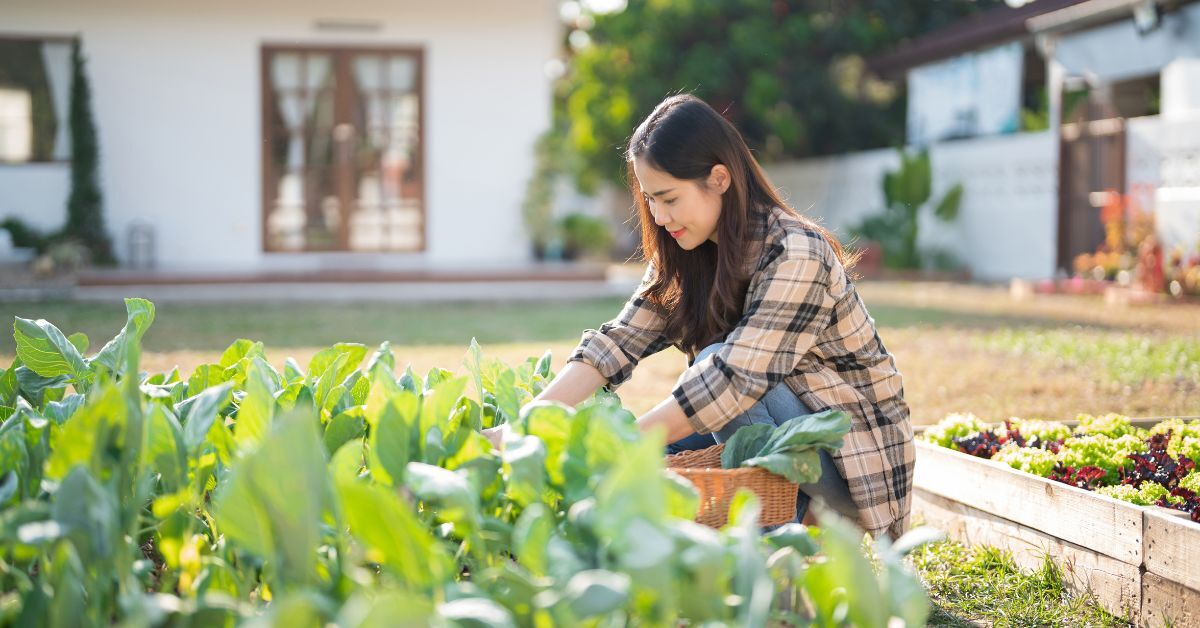
You probably don’t have acres of tomatoes growing behind your house or a tractor parked next to your raised beds. Still, at-home gardeners can learn a surprising amount from people who grow food on a much larger scale.
Farmers have to think about soil health, changing weather, pests, timing, and long-term productivity because their livelihood depends on it. Bringing some of that same mindset into your backyard can help you create a garden that produces more while working more sustainably. Learn what at-home gardeners can take from farmers below!
Treat Your Soil Like an Investment
One of the biggest lessons to borrow from farmers is that healthy plants begin below ground. Instead of thinking of soil as something that simply holds your plants upright, consider it a living part of your garden that needs ongoing care.
Start by learning what you’re working with. A soil test can reveal nutrient deficiencies and other characteristics that may influence how well certain plants grow, helping you make more intentional decisions instead of automatically reaching for fertilizer.
Once you know what your soil needs, focus on building its health over time. Compost and organic matter can improve soil while supporting a more sustainable approach to gardening, and mulch can help protect the soil and reduce moisture loss.
Rotate What You Grow
Farmers don’t necessarily plant the same crop in the same spot year after year, and for good reason. Crop rotation helps interrupt cycles involving certain soil-borne diseases and overwintering insects.
You can practice rotation even if your “farm” consists of two raised beds and a few containers. Keep a simple note on your phone about what you planted and where, then switch up the locations of different plant families the following season.
For example, tomatoes, peppers, eggplants, and potatoes belong to the same plant family. Instead of moving your tomatoes two feet over and calling it a day, rotate plant families whenever your available garden space makes it possible.
Pay Attention Before There’s a Problem
Farmers spend a lot of time observing, and home gardeners can benefit from doing the same. Make a habit of walking through your garden and noticing what has changed since your last visit.
Look under leaves, check stems, and pay attention to the soil. You may notice insect activity or the beginning stages of a disease before the problem has a chance to spread throughout your garden.
Learn To Read Your Plants
A planting or harvesting calendar is helpful, but nature doesn’t always care what your planner says. Temperature, rainfall, sunlight, and other growing conditions can influence how quickly a plant develops.
Farmers learn to look at the crop itself for signs that it’s ready. At home, you can do the same by learning the visual and physical signals associated with whatever you’re growing.
Know When It’s Actually Time To Harvest
Onions are a great example. Instead of assuming every onion will be ready on a particular date, gardeners can watch the tops and inspect the bulbs to determine maturity; mature bulb onions generally have dried foliage and tops that have broken over near the neck.
Learning more about when onions should be harvested can help you recognize these signals and understand why different sections of a planting may mature at slightly different times. That farmer-like habit of observing before acting can translate to plenty of other crops, too.
Stop Expecting Perfection
Here’s a freeing lesson from agriculture: growing food involves variables you cannot completely control. There will be weird weather, hungry insects, disappointing plants, and the occasional cucumber that looks like it came from another planet.
A successful garden doesn’t need to look like an Instagram photo. Give yourself permission to work with nature instead of constantly trying to control it. A few chewed leaves don’t necessarily mean you need to spray the entire garden, and imperfect produce can still taste incredible.
Make Watering More Intentional
Farmers know water is a resource, not something to use without a plan. Home gardeners can adopt the same philosophy, especially if sustainability is one of the reasons you started gardening in the first place.
Instead of giving everything a casual sprinkle whenever you remember, pay attention to actual soil moisture and the needs of individual plants. Watering near the soil rather than soaking foliage can also help reduce conditions that encourage some diseases.
You can also make your watering routine more efficient with simple changes, such as:
- Adding mulch to reduce evaporation
- Using drip irrigation or soaker hoses when appropriate
- Grouping plants with similar watering needs
- Checking soil moisture before automatically watering
The goal isn’t to deprive your plants. It’s to make each watering session more purposeful.
Grow With Your Local Conditions
There’s a reason farms look different depending on where you travel. Successful growers work with their climate and growing conditions rather than pretending those conditions don’t exist.
At-home gardeners sometimes get caught up in growing whatever is trending online. That gorgeous plant you saw on social media might thrive in someone else’s backyard while becoming a high-maintenance headache in yours.
Consider your available sunlight, soil conditions, typical temperatures, and growing season before choosing plants. Selecting crops suited to the site is also an important part of preventative pest management because healthier plants tend to be better equipped to withstand pest and disease pressure.
Keep Records of What Works
You don’t need a complicated spreadsheet to start thinking like a grower. A simple garden journal can become one of your most useful tools because every growing season gives you information about your specific space.
Write down planting dates, unusual weather, harvest timing, pest problems, and varieties you loved enough to grow again. You might also note which plants struggled or where certain crops performed particularly well.
Over time, those notes become your personal gardening guide. Instead of starting from scratch every spring, you can build on what your own backyard has already taught you.
Think Beyond a Single Growing Season
One of the most valuable lessons at-home gardeners can learn from farmers is that growing food is a long game. Decisions you make this season can influence your garden’s health and productivity later.
That mindset naturally supports more sustainable choices. Crop rotation, composting, thoughtful soil management, and reduced reliance on pesticides can all help you build a garden that stays productive rather than simply looking impressive for one summer.
Your garden doesn’t have to reach its full potential immediately. Each season is an opportunity to improve the soil, learn something new, and make the next growing season a little easier.
Become a Student of Your Garden
Farmers are constantly responding to what happens around them, and that may be the most useful habit for home gardeners to borrow. Gardening becomes much more enjoyable when you stop treating every unexpected development as a failure and start seeing it as information.
You may only be tending a raised bed or a stylish collection of patio containers, but with a farmer’s mindset, even a small garden can become a productive and sustainable little ecosystem.


