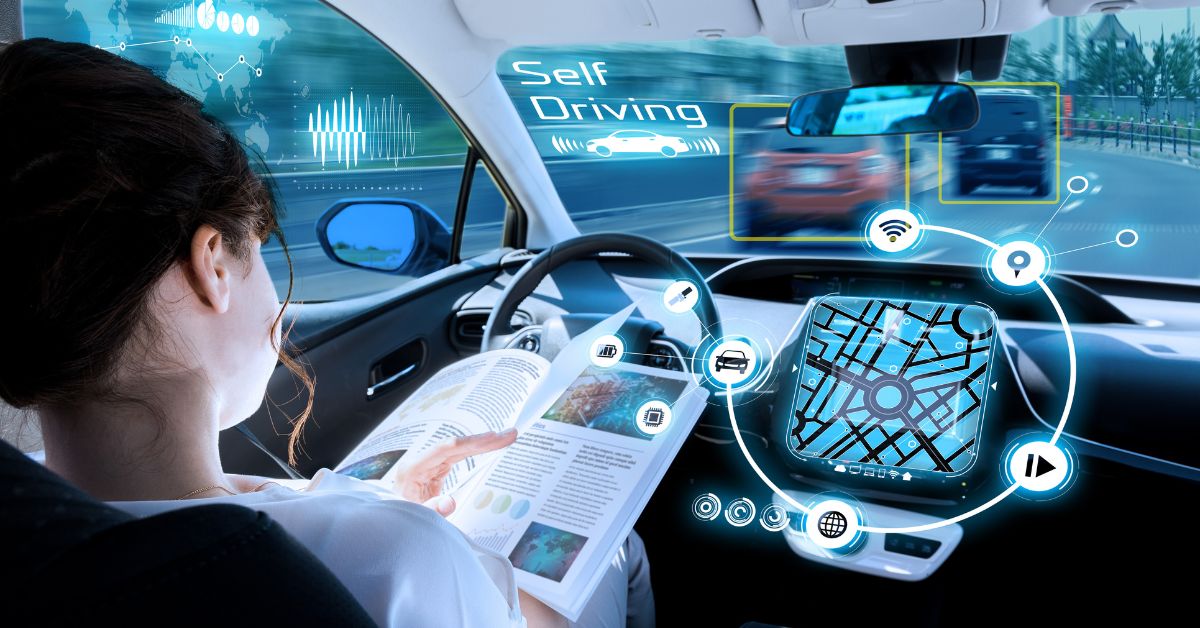
Self-driving vehicles promise to revolutionize transportation as we know it. These autonomous cars use advanced technology to navigate roads without human intervention, potentially reducing accidents and transforming how we travel.
Understanding how these vehicles work and their environmental impact becomes crucial as they move closer to mainstream adoption.
How Self-Driving Cars Actually Work
Autonomous vehicles rely on a complex network of sensors, cameras, and artificial intelligence to perceive their surroundings. LIDAR sensors create detailed 3D maps of the environment, while cameras capture visual information about road signs, traffic lights, and pedestrians.
The vehicle’s computer processes this information in real-time, making split-second decisions about steering, braking, and acceleration. Machine learning algorithms help the car recognize patterns and respond to unexpected situations. Plus, advanced GPS systems provide precise location data, while high-definition maps offer detailed information about road layouts and traffic patterns.
The Environmental Promise of Autonomous Vehicles
Self-driving cars offer significant environmental benefits that appeal to sustainability-conscious consumers. These vehicles optimize driving patterns, reducing fuel consumption through smoother acceleration and braking. Traffic flow improves when autonomous vehicles communicate with each other, minimizing stop-and-go congestion that wastes energy.
Many autonomous vehicle manufacturers focus on electric powertrains, combining clean energy with smart driving technology. This dual approach addresses both emissions reduction and energy efficiency. Fleet sharing becomes more practical with self-driving cars, potentially reducing the total number of vehicles needed on roads.
Current Challenges and Limitations
Despite promising developments, autonomous vehicles face several hurdles before widespread adoption. Weather conditions like heavy rain, snow, or fog can interfere with sensor accuracy. Additionally, construction zones and unusual road configurations present challenges for current AI systems.
Electrical connectors power autonomous vehicles and must maintain reliable connections despite vibrations and temperature changes. These components require robust engineering to ensure consistent performance across all vehicle systems. Also, manufacturing costs remain high, though economies of scale should reduce prices over time.
Regulatory frameworks struggle to keep pace with technological advancement, and different regions develop varying standards for autonomous vehicle testing and deployment. Finally, public acceptance varies significantly, with some consumers embracing the technology while others express safety concerns.
The Road Ahead for Autonomous Transportation
Major automakers and tech companies continue investing billions in autonomous vehicle development, and as testing programs expand across multiple cities, they gather real-world data to improve system performance.
Additionally, infrastructure improvements support autonomous vehicle deployment. Smart traffic signals communicate with vehicles to optimize intersection timing. Dedicated highway lanes may eventually accommodate self-driving cars exclusively.
The timeline for full autonomy remains uncertain, but partial automation features already appear in consumer vehicles. Adaptive cruise control, lane-keeping assistance, and automatic emergency braking represent stepping stones toward complete autonomy.
Embracing the Autonomous Future
Self-driving vehicles represent more than technological novelty—they offer a path toward sustainable, efficient transportation. While challenges remain, continued development addresses safety, environmental, and practical concerns. The convergence of artificial intelligence, clean energy, and smart infrastructure creates opportunities for transformative change in how we move through the world.
As autonomous vehicles evolve, they promise to reduce traffic accidents, lower emissions, and provide mobility solutions for underserved populations. The journey toward full autonomy continues, bringing us closer to a future where transportation becomes safer, cleaner, and more accessible for everyone.


