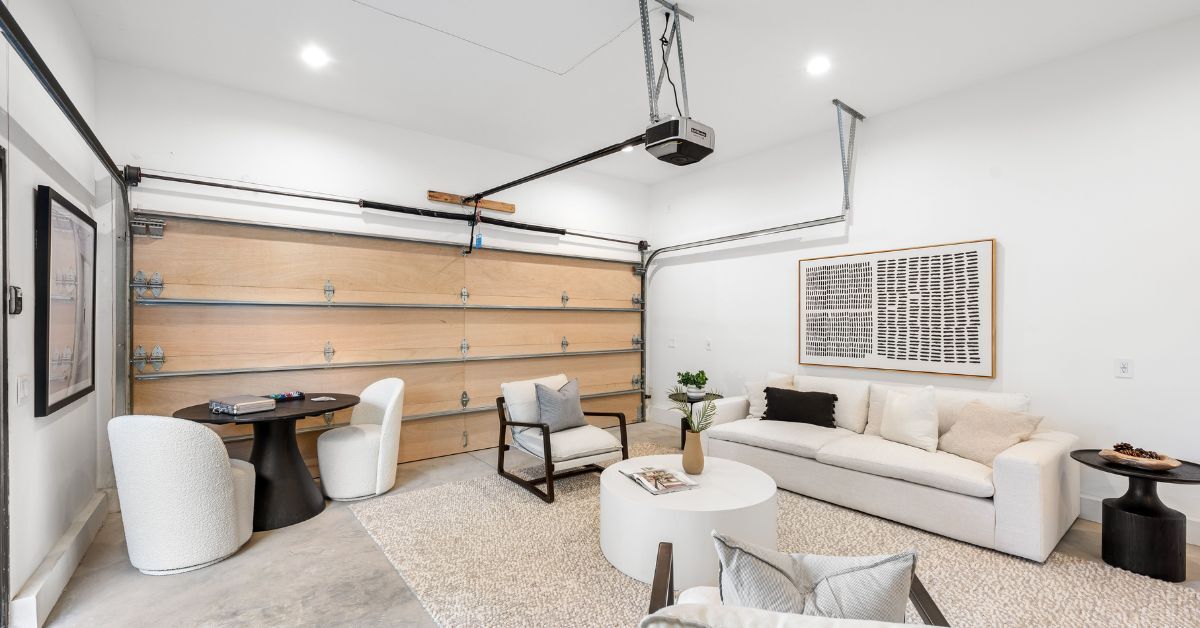
Garages often become storage zones for boxes, forgotten equipment, and seasonal clutter. Yet that underused square footage holds serious potential. With thoughtful planning and sustainable upgrades, it can transform into something functional, beautiful, and efficient. Here’s how to redesign a garage into a sustainable living space.
Assessing Structure and Local Requirements
Before choosing paint colors or flooring, evaluate the structure itself. Check ceiling height, foundation condition, moisture levels, and existing electrical capacity. Many garages lack proper insulation, adequate wiring, or sufficient ventilation, so identifying limitations early prevents expensive surprises later.
Contact your local building department to confirm zoning rules and permit requirements. Some municipalities require specific egress windows, upgraded electrical panels, or minimum ceiling heights for habitable rooms. Addressing these details upfront keeps the project efficient and ensures the finished space meets safety standards.
Improving Insulating and Sealing
When redesigning a garage into a sustainable living space, consider controlling temperature and airflow. Garages typically feature thin walls, exposed studs, and uninsulated concrete floors, which cause heat loss in winter and overheating in summer.
Upgrade wall cavities with high-quality insulation such as mineral wool or dense-pack cellulose. Install a vapor barrier where appropriate, seal gaps around framing, and replace the garage door with an insulated wall system or energy-efficient door. If the slab feels cold, consider adding a subfloor system with rigid foam insulation to prevent energy loss.
Focus on sealing air leaks around windows, framing joints, and utility penetrations. Small gaps can significantly increase heating and cooling costs over time.
Selecting Sustainable Materials and Finishes
Choose materials that lower environmental impact and support healthier indoor air. Reclaimed wood, recycled-content drywall, and low-VOC paints help reduce waste and chemical exposure.
For flooring, polished concrete, responsibly sourced hardwood, or cork provide durability with a modern feel. Incorporating LED lighting and maximizing natural light further reduces energy use while improving comfort.
Key sustainable upgrades to consider include the following:
- Installing energy-efficient windows with proper sealing
- Using low-VOC primers and paints
- Choosing recycled or reclaimed materials
- Adding smart thermostats for energy control
- Selecting durable finishes that reduce replacement frequency
Installing Efficient Climate Control Systems
Heating and cooling make or break comfort in a converted garage. Many homeowners choose ductless mini-split systems because they provide targeted temperature control without requiring major ductwork changes.
Like any high-efficiency system, performance depends on consistent upkeep. Knowing how to maintain your mini-split keeps the system running efficiently and prevents unnecessary energy waste. For example, cleaning the air filters every 30 days helps the system operate more efficiently and maintain consistent year-round temperatures.
Designing for Flexible, Long-Term Use
Designing with adaptability in mind ensures the space remains useful for years to come. A thoughtfully converted garage can transition easily between a home office, guest suite, studio, or even a rental unit as needs shift. Ample outlets, layered lighting, and built-in storage support that flexibility without requiring constant updates.
Multi-functional furniture, such as sleeper sofas or fold-away desks, helps maximize square footage while maintaining comfort. Neutral finishes also allow the room to evolve stylistically over time. With careful planning, the space can adapt naturally without requiring major renovations later.


